What to eat gluten-free in Kraków: a guide to traditional Polish food
Poland is often introduced through its food.
Pierogi, bigos, soups that simmer for hours, bread served with almost everything — it’s a cuisine built for comfort, especially in colder months. It’s generous, filling, and deeply traditional.
Which sounds great… unless you can’t eat gluten.
At first glance, Polish food might seem like something to approach carefully. And to be fair, there’s a reason for that. Flour appears in more places than you’d expect, and not always where you can see it.
However, you can absolutely eat well — and safely — in Kraków.
You just need to understand how things work.
If you’re planning a trip to Kraków and want a simpler way to navigate gluten-free options, I’m putting together a practical gluten-free Kraków guide with curated places and tips. You can join the waiting list here.

Why Polish cuisine can be tricky for gluten-free diets
One of the defining features of Polish cooking is how often flour is used behind the scenes.
It’s not just about bread or dumplings. Flour quietly finds its way into:
- soups, to make them slightly thicker
- sauces, to give them a smoother texture
- fillings, where breadcrumbs are added almost automatically
Another very common source of gluten is breading. Many dishes that look simple at first glance are coated and fried (for example, the traditional kotlet schabowy).
And sometimes, gluten is simply not mentioned. A dish may look harmless, but the detail that matters is hidden in the preparation.
That’s why, in Poland, eating gluten-free is less about avoiding entire categories of food — and more about knowing where to look twice.
The good news: many Polish dishes are naturally gluten-free
Despite all of this, Polish cuisine is actually built on ingredients that are naturally gluten-free.
Think about what traditional meals are made of:
- meat
- potatoes
- vegetables
- eggs
- fermented foods
Especially fermented foods — kiszonki — which are a big part of Polish cuisine. Pickled cucumbers, sauerkraut, fermented vegetables. Simple, traditional, and usually very safe.
In other words, the foundation is not the problem.
It’s the details.
A simple way to think about Polish food
Instead of trying to memorize every dish, it helps to think in patterns.
The usually safe side
Some foods are, by their nature, uncomplicated.
Simple meat dishes, eggs, fermented vegetables — these rarely hide gluten. If they are not covered in sauce or breadcrumbs, they are often a good starting point.
The “depends how it’s made” category
This is where most Polish dishes live.
Soups, cabbage dishes, salads, potato-based meals — they can all be gluten-free…
or not.
- Rosół (clear chicken soup) is usually safe — until noodles are added
- Gołąbki (cabbage rolls) sound harmless — until breadcrumbs appear in the filling or the sauce is thickened
- Potato pancakes should be gluten-free — but in restaurants they are often made with added wheat flour
The ones to be careful with
And then there are dishes that are simply built around gluten.
- Dumplings — pierogi, kopytka, pyzy — are all based on flour
- Breaded meat dishes (like kotlet schabowy) are another obvious example
- Rye-based dishes, such as żurek, are not gluten-free by design
These are usually best treated as exceptions rather than options.
A few classic Polish dishes (and what to expect)
If you’re visiting Kraków, you’ll likely come across at least some of these.
Starters & soups
Tatar (steak tartare)
One of the safer choices. Just skip the bread served alongside.
Śledzie (herring)
Usually fine, though marinades can vary — worth a quick check.
Rosół (chicken broth)
Simple and traditional. Ask for it without noodles.
Barszcz (beetroot soup)
Often safe when served clear. Less so if it comes with dumplings or pastries.
Żurek (sour rye soup)
A classic — but not a gluten-free one.
Main dishes
Bigos (hunter’s stew)
Often gluten-free, though ingredients can vary slightly.
Gołąbki (cabbage rolls)
A good option — but only if breadcrumbs and sauce are not an issue.
Placki ziemniaczane (potato pancakes)
Naturally gluten-free in theory or when made at home, but in restaurants they often contain flour — always worth asking.
Pyzy (potato dumplings)
Often contain wheat flour, although some versions use only potatoes and potato starch.
The small details that matter most
In many cases, the difference between a safe meal and a risky one comes down to small details.
Things like:
- a sauce thickened with flour
- breadcrumbs added “just a little”
- shared kitchen surfaces (cross-contamination)
- assumptions that something is “probably fine”
These are the moments where gluten tends to appear.
And they’re also the reason why experience — or guidance — becomes important.
Where it gets easier in Kraków
Kraków is, fortunately, one of the easier places in Poland for gluten-free travelers.
Awareness is growing. Some restaurants understand gluten-free requirements well, and a few even specialize in adapting traditional dishes.
Places like Pod Baranem, for example, are known for preparing Polish cuisine with gluten-free needs in mind — which makes a noticeable difference.
Because in the end, it’s not just about the dish.
It’s about who prepares it.
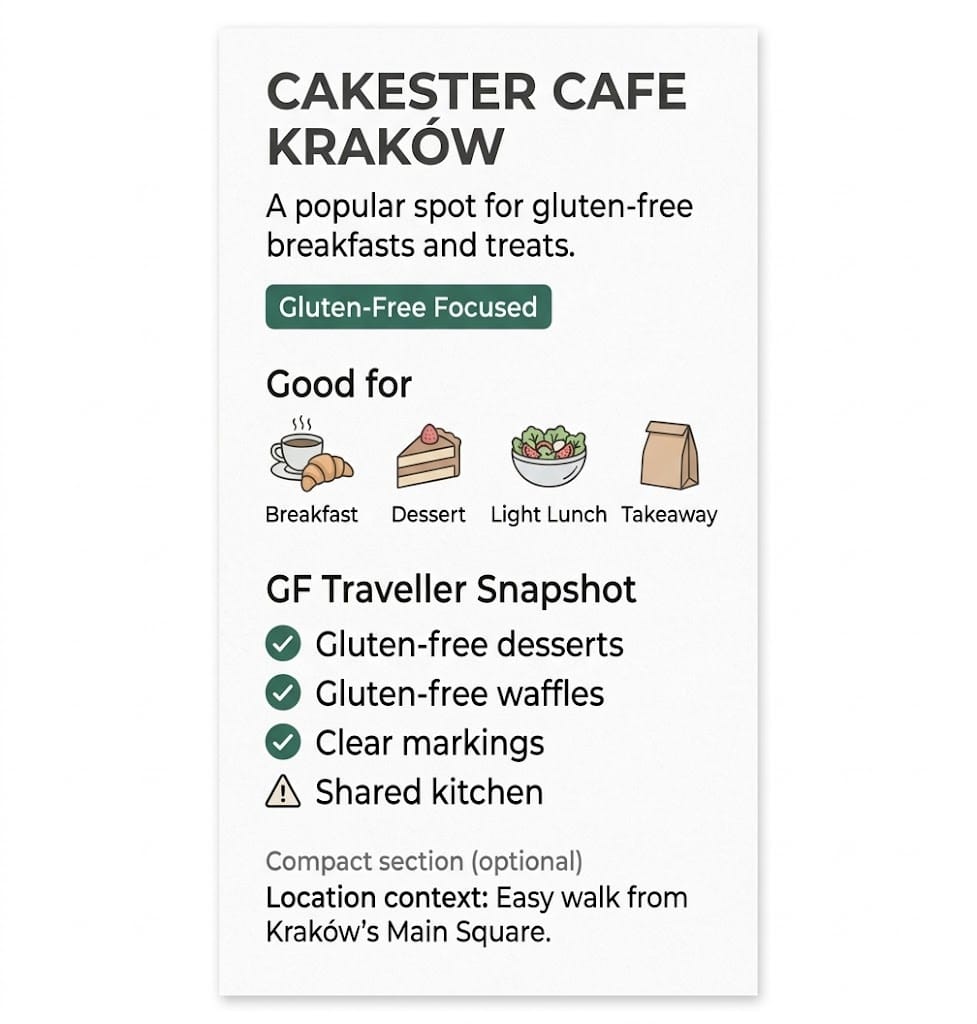
If you’d rather not figure this out on your own, the gluten-free Kraków guide includes carefully selected places where gluten-free meals are handled with real attention to safety — along with practical notes for each location.
Summary
Polish cuisine may not seem like the most obvious choice for a gluten-free diet.
But once you look a little closer, it becomes manageable.
- many dishes are naturally gluten-free
- some just need small adjustments
- others are best avoided
You don’t need to learn everything.
Just understand the patterns, ask when needed, and choose places that take gluten-free seriously.
That’s usually enough to enjoy Kraków the way it was meant to be experienced — through its food.
If you’re planning your trip and want to make things easier, the gluten-free Kraków guide brings everything together in one place — from curated restaurants to practical tips that help you navigate the city with confidence.
Gluten-Free Kraków Guide
Find safe places to eat and buy gluten-free products.
Travel with confidence and save time on research.
Stay updated
Get practical tips and updates for gluten-free travel in Kraków.
Gluten-Free Kraków Guide
Find safe places to eat and buy gluten-free products.
Travel with confidence and save time on research.

Created with © systeme.io